My Doctor Says I Should Read More (Comics): Discovering Graphic Medicine
If you’re anything like me, your relationship with medical information usually involves a pamphlet with vague, 'helpful' titles (like Taking Care of Your Mental Health) that lack actual substance. Or, it's a textbook filled with so much technical jargon it acts as a more effective sleep aid than melatonin.
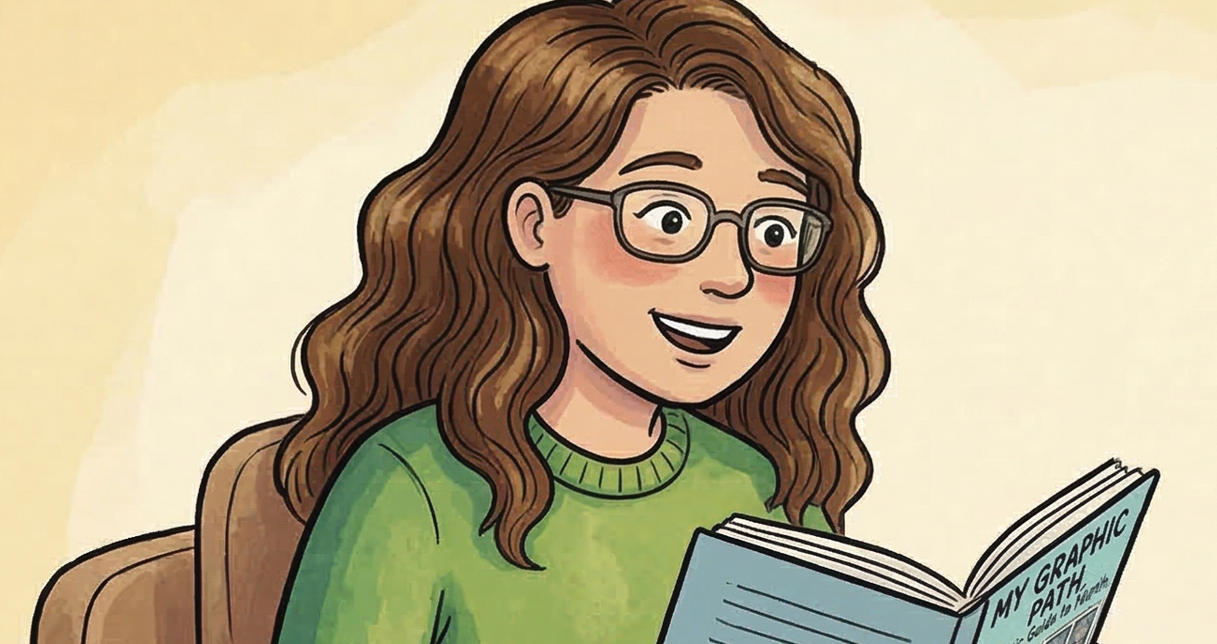
Thanks to a friend’s recommendation, I was introduced to Graphic Medicine, a genre where medical topics are explored through graphic novels (which you know by now is my favorite medium). In some, the medical topic is the whole point of the novel and in others, it is just part of the broader story, like in Rynado.
Coined in 2007 by Dr. Ian Williams (a man who is both a physician and a comics artist, because apparently being one kind of hero wasn't enough), Graphic Medicine is the intersection of the medium of comics and the discourse of healthcare.
It turns out that when you swap clinical 'blah blah blah' for the visual punch of a comic, something magical happens: the patient disappears and a person emerges. Plus, it’s much harder to fall asleep during a story about a migraine when the migraine is drawn as a tiny, malevolent goblin with a jackhammer or a tantrum is drawn as a raging tornado ;)
I’ve just starting exploring the Graphic Medicine website, which has a treasure trove of podcasts and book reviews. I’m currently diving into their Spotlight series. There are even other artists that are new to this graphic novel world who similarly felt compelled to find meaning out of madness.
Spotlights are like the staff picks section of a library, but instead of "Historical Romances Set in Scotland," it’s "Relatable Stories About Chronic Pain and Existential Dread." I just finished reading the synopsis of a Cadaver Lab Horror Comic by Becca Lewis, and I have found a kindred soul.
The Spotlights feature artists, authors, and researchers from all over the world.
It’s Surprisingly Vibrant: You’d think a website about medicine might be a bit of a downer, but the Spotlights are surprisingly funny, and weird. One week you’re reading about a superhero battling a proton beam (The Intrepid Proton-Man), and the next you're seeing a deeply moving, hand-drawn memoir about caring for a parent with dementia.
The Secret Club of Shared Struggle: Reading the Spotlights is like finding a secret club where everyone admits that being a human is difficult. There is something incredibly validating about seeing a complex struggle rendered in ink and watercolor.
A Brain Cheat Code: I can read a 50-page white paper on "Intergenerational Trauma" and remember approximately 2% of it. But show me a comic about a family’s journey with mental health, and those images stay with me for weeks and some of the moments will stay forever. It’s like a cheat code for your brain.
Until next time,
Odi